- Touching a Fibonacci retracement level in a downtrend is usually interpreted as a sell signal.
- It is essential to evaluate whether the potential to lose more than the initial investment is financially sustainable.
- On the other hand, a descending trendline, connecting lower highs, acts as resistance in a downward trend.
- The same strategy works in reverse when resistance breaks and becomes new support.
- Once order flow is communicated to the market, it’s immediately reflected in price movement.
- The newly formed objects can be accumulated into support or resistance zones.
Why are support and resistance levels important for traders?
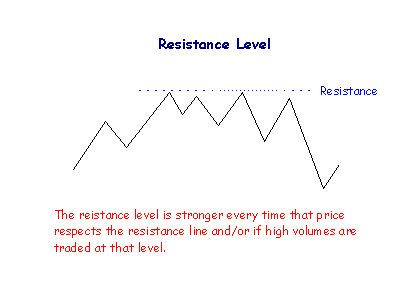
Static levels work well in markets that are moving sideways, where prices bounce within clear boundaries. For example, in a range-bound stock market, static levels offer dependable areas of support and resistance. Support and resistance indicators highlight price levels where commodities often stall or reverse, helping traders spot entries, exits, and breakouts. There is no guarantee that predicted support and resistance levels would always hold true. If a price breaks through an established support or resistance level, this is called a breakout.
Using support and resistance in trading
Another clear indication of support or resistance zones will be a no-breakout retest. A support or resistance trading area that has been broken is no longer relevant and shouldn’t be analyzed. The price might hold onto it for a short trade period, but most of such signals will be false. On the above chart you can see a good example of a support level at 29,000 USD for one Bitcoin. The sellers have attempted to break support level four times in 2021, but the buyers managed to keep the value unchanged. I have already mentioned support and resistance trading ranges casually in my article on technical analysis, in the Common terms section.
Can automated systems use support and resistance levels?
A level that appears minor on a 15-minute chart could represent a major support area on a daily or weekly timeframe. As with any asset, price behaviour depends on the interaction between supply and demand. At a certain low price, however, the asset may appear undervalued enough for some traders to enter the market. This becomes the support level, where demand begins to outweigh supply, causing the price to stabilise or rebound. It can be helpful to think of these terms in the context of a real world marketplace.
Preview some of TrendSpider’s Data and Analytics on select Stocks and ETFs
Now that we have a basic understanding of forex trading, let’s move on to examine the concept of support and resistance. Rather than entering immediately as price penetrates a level, patient traders wait for price to close beyond the level, preferably by a meaningful margin. Some traders require the price to close beyond the level on multiple consecutive candles before accepting the breakout as legitimate.
Mistake 7: Overcomplicating the Analysis

Clearly, the horizontal line is below the current market price of 442.5, making 429 an immediate support price for Cipla. The best way to identify the target price is to identify the support and resistance points. The support and resistance (S&R) are specific price points on a chart expected to attract the maximum amount of either buying or selling.
Previous Swing Highs and Lows
The most reliable support and resistance areas tend to be the ones that are confirmed by multiple strategies. Confluence is when a combination of multiple strategies are used together to create one strategy. Support and resistance levels tend to be the strongest when they fall into multiple of these categories that we’ve discussed. On the most fundamental level, support and resistance are simple concepts.
Dynamic vs Static Support and Resistance
Trading with leverage amplifies risks, and it is crucial to assess risk tolerance before engaging in trading. It is essential to evaluate whether the potential to lose more than the initial investment is financially sustainable. If you’re day trading, focus on today, and don’t get too bogged down with figuring out where support and resistance were on prior days.
Meta: V-Shaped Recovery Meets Heavy Volume Resistance
Then go to Charts, choose Line charts, enable Grid, and go to Properties. When it comes to candlesticks, which are a default mode of representation, they might have errors in long shadows. Leverage your insights and take the next step in your trading journey with an XS trading account. If you’ve read our classical chart patterns article, you’ll know that patterns will also act as barriers for price. The content API key is missing, please read the theme documentation.
Trader Psychology in Using Support and Resistance Levels
However, if the price breaks below support with strong momentum or volume, it may indicate a bearish trend and further downside potential. These levels are not fixed points but dynamic zones that evolve with market behaviour, making them essential tools for timing entries and exits. Position sizing deserves careful consideration iqcent trading crypto at support and resistance zones.
]]>